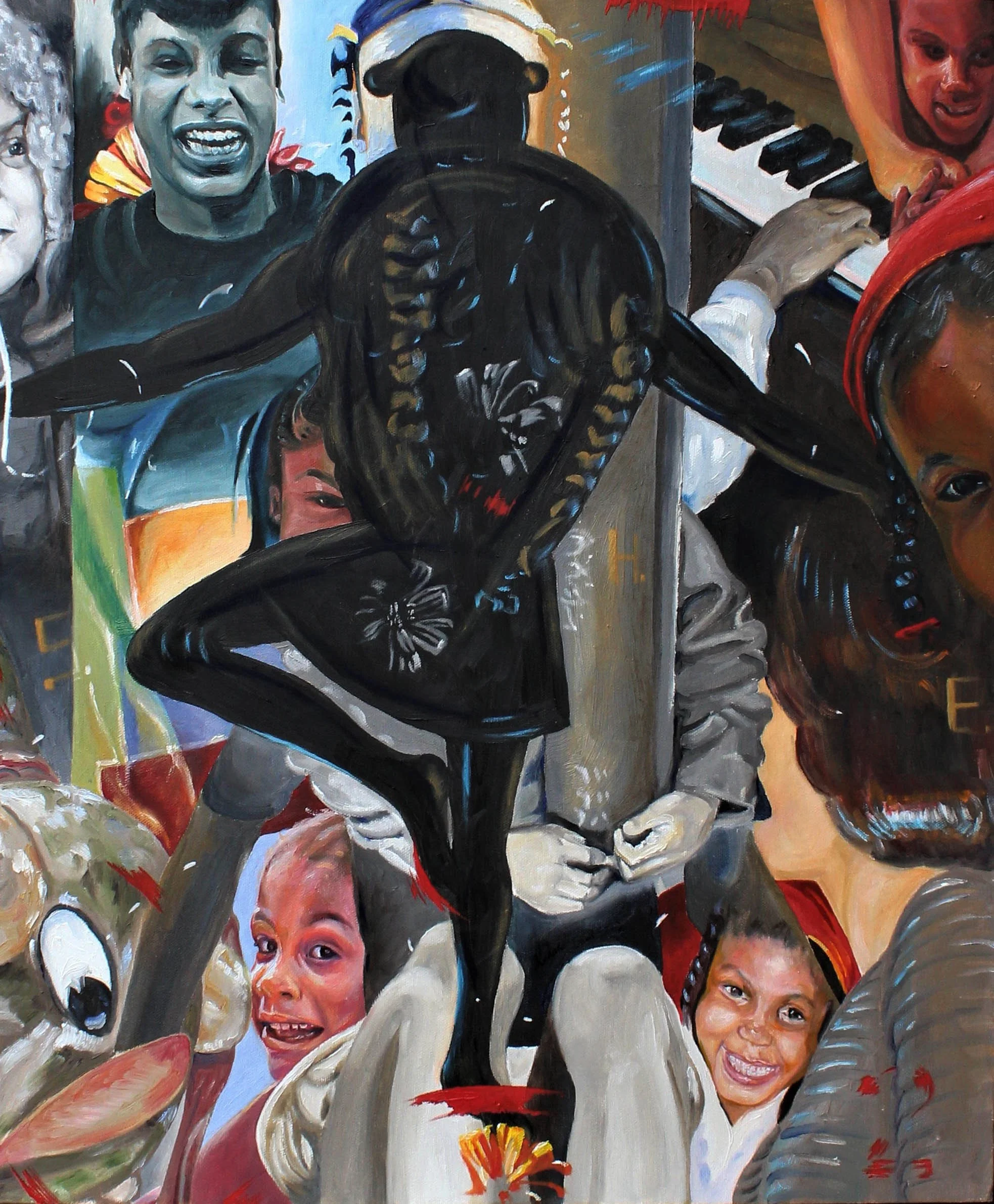
In Shawn Over Time, the figure is rendered in multiple images, like from a photo album, with a sensitivity that suggests both presence and change. The portraits feel lived‑in in their time, multiple versions of the sitter layered beneath the surface. This temporal depth gives the painting a direct intensity, inviting viewers to consider how identity evolves in ways that are often imperceptible until they look back at their own album.
The setting reinforces this sense of duration. Light falls across the figures in varying gradients, the facial colors are from their time -suggesting the passage of time. The overlapping images and spaces become vessels for memory, reflection, and emotional resonance. The developed palette and controlled overlapping composition create a contemplative atmosphere that encourages slow looking.
This work places the fragmentation of time, surface, and emotional inquiry out front, whereas Glass Dragon and Chicken and Fragments both invite visual imagery to initiate the exploration of psychological space. All three paintings use emotionally interior environments as stages for emotional inquiry. Where the dragon and chicken enact a symbolic encounter, Shawn embodies the subtler drama of human change—outward, continuous, and deeply felt when engaged.