Glass Dragon & Chicken- 1985
and Related Works
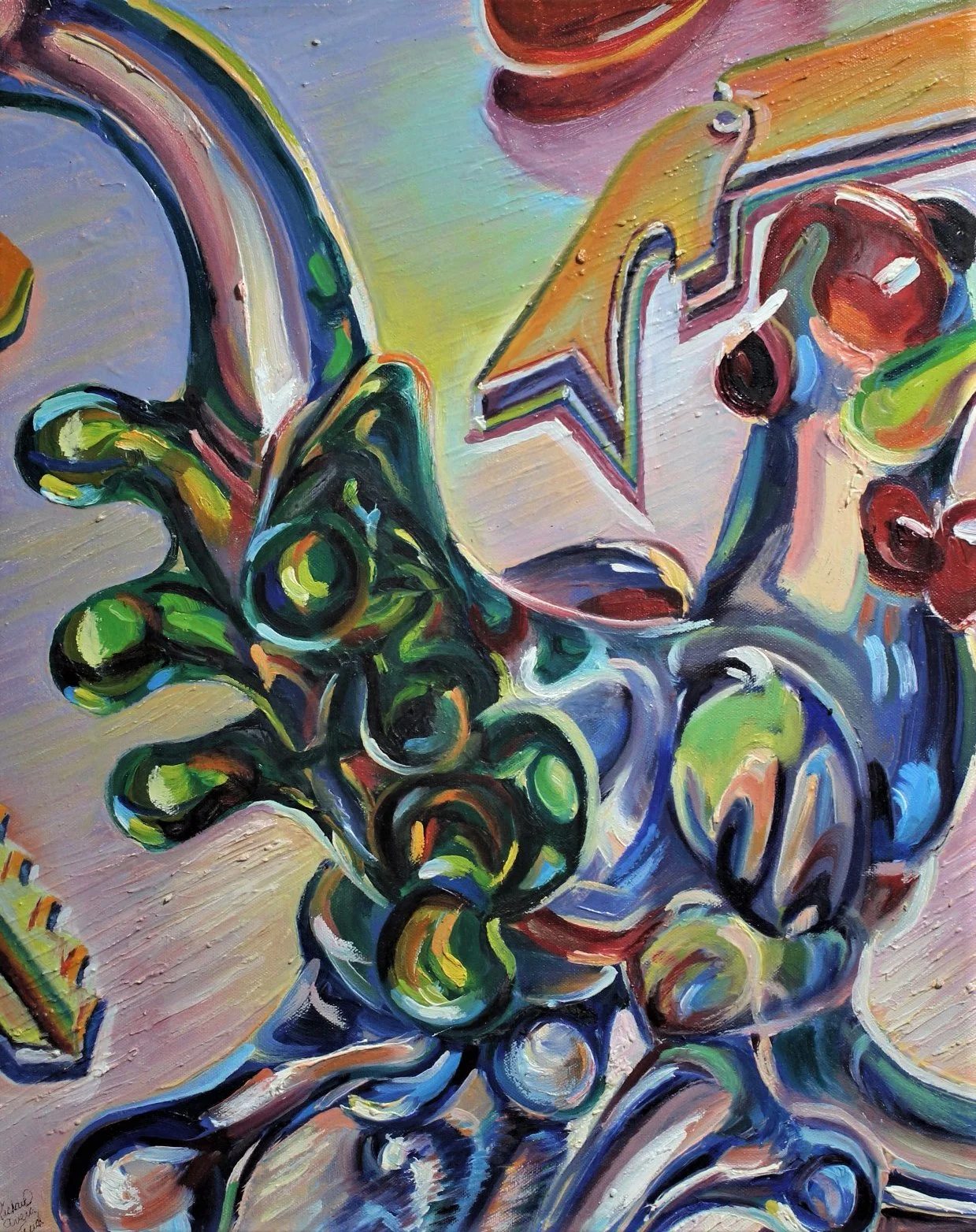
A surreal pairing of color intensity and force, Glass Dragon and Chicken stages an excited confrontation between myth for some people and playfulness for others. The scene feels both humorous and uncanny, as if two symbolic worlds have collided inside a room that is too still to contain them. The work invites viewers to consider how simple toy objects become psychologically charged when placed in the theater of interior space.
A mid‑career oil painting that merges mythic symbolism with the fragile materiality of glass, Glass Dragon and Chicken (1985) Richard L Tuck’s 1980s period of experimentation—where modernist technique meets cultural critique. The pairing of dragon and chicken creates a tension between power and vulnerability, myth and domesticity, permanence and fragility.
Richard L Tuck, Glass Dragon and Chicken, oil on canvas, 30×40”, 1985
Glass Dragon and Chicken presents two symbolic figures rendered in paint as glass surfaces. The dragon—traditionally a sign of strength, protection, and mythic force—appears to transfer its power to paint, its transparency suggesting both resilience and visual energy. Opposite it, the chicken introduces a counterpoint: a creature tied to fertility, prosperity, spiritual symbolism, and everyday life but here its goofy emergence in paint. Their juxtaposition creates a layered dialogue between the heroic and the humble, the fantastical and the light-hearted.
The painterly treatment of glass materiality heightens this tension. Both figures seem suspended between solidity and surface elaboration, echoing the cultural contradictions of the 1980s—an era of spectacle, consumerism, and symbolic overload. The painting’s modernist handling of form and color anchors these symbols in a grounded, painterly reality, while the Pop‑inflected imagery invites viewers to question what myth is, what is commodity, what is valuable, and what is simply part of daily life.
Related works below explore the joyful excitement of color on and within surfaces
Related Art Works
-
![An abstract painting featuring vibrant, swirling colors and shapes, including a green and black cluster resembling grapes, a gold star with purple outline, and various curving lines in shades of blue, red, green, and yellow.]()
Glass Rooster - 1983
An exploration of glass‑material symbolism.
-
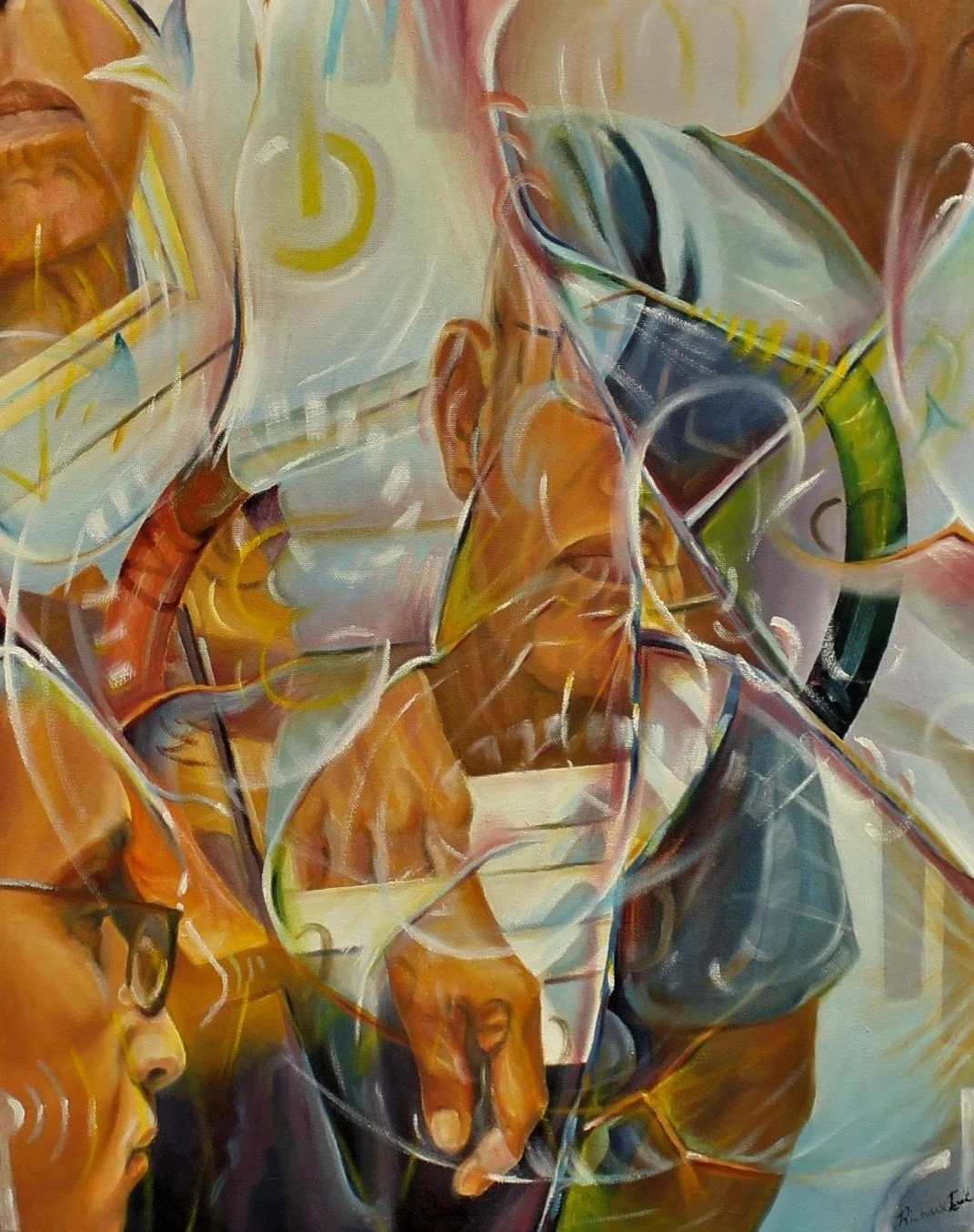
![Abstract painting featuring outlined human faces and figures with vivid colors like orange, yellow, and green with dynamic lines and shapes and digital imagery.]()
Broken Mirror - 2017
Fragments of a face exploring fragility, reflection, and fractured perception.
-
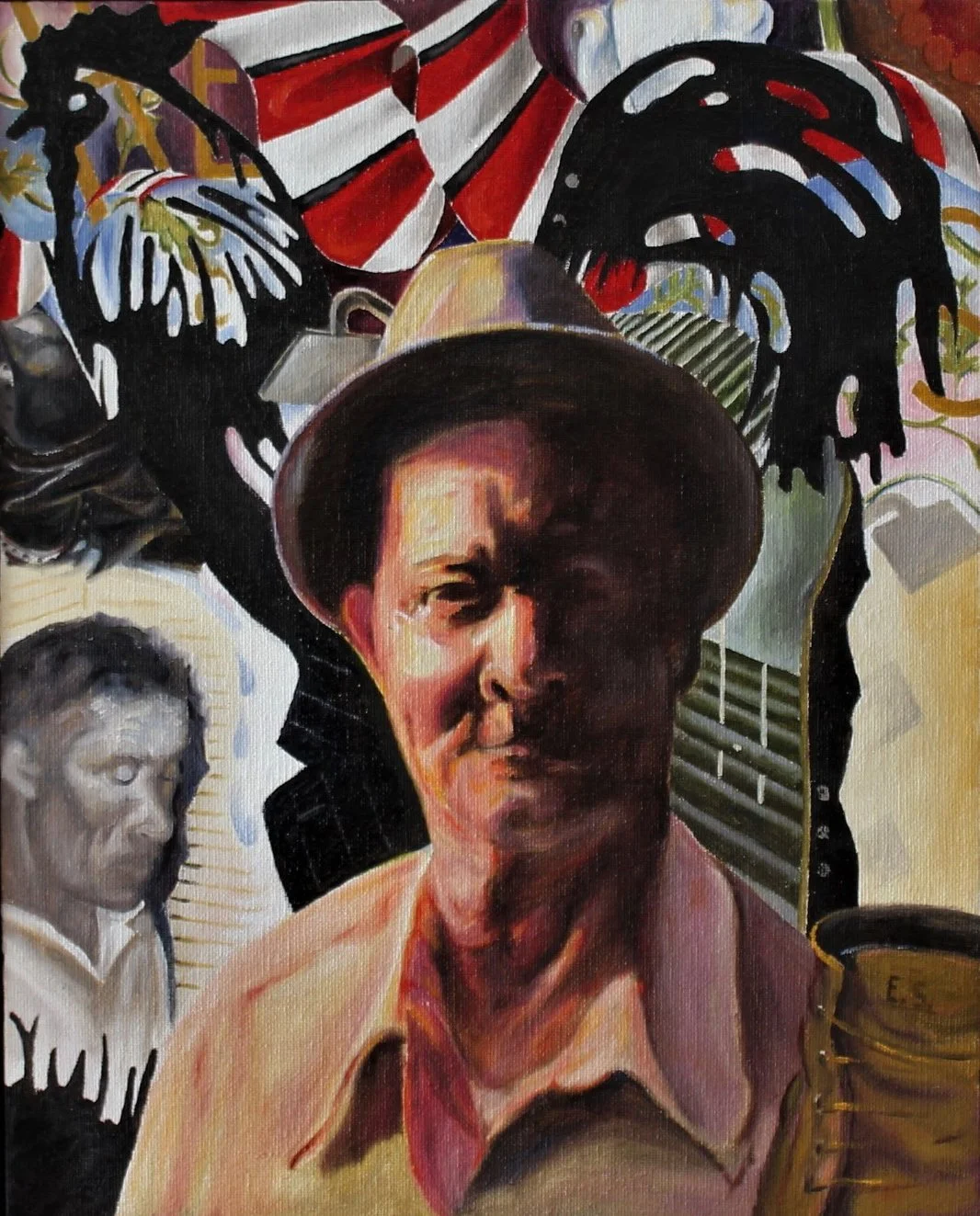
![Painting of a man wearing a hat and beige shirt, with Easter Island statues and tropical leaves in the background.]()
Mr. Charlie - 2019
Figurative portrait work with symbolic animal presence.
-
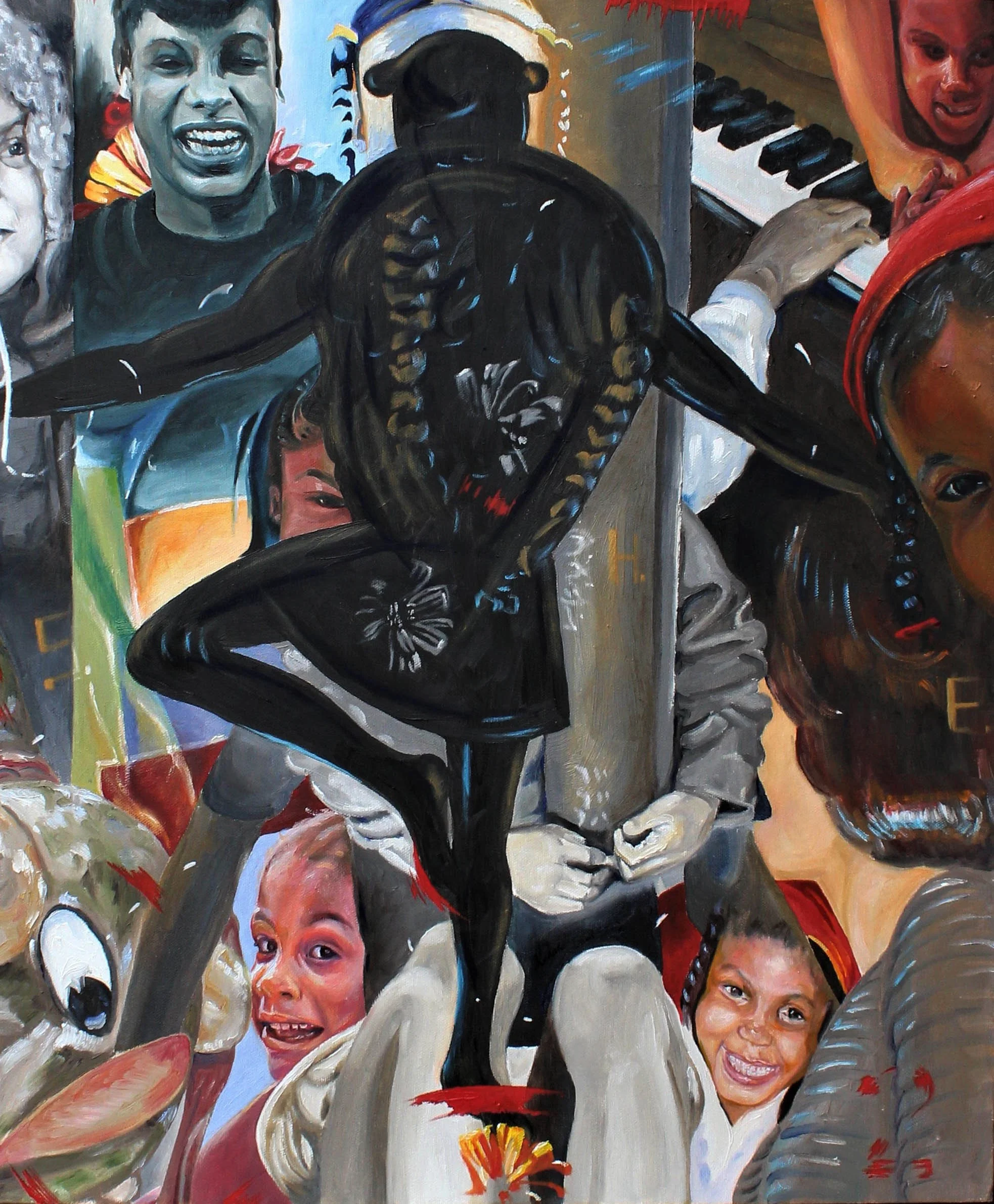
![A colorful painting featuring a diverse group of children and adults smiling and engaging in various activities, including playing musical instruments and posing for the camera.]()
Shawn Over Time - 2-18