 Image 1 of 1
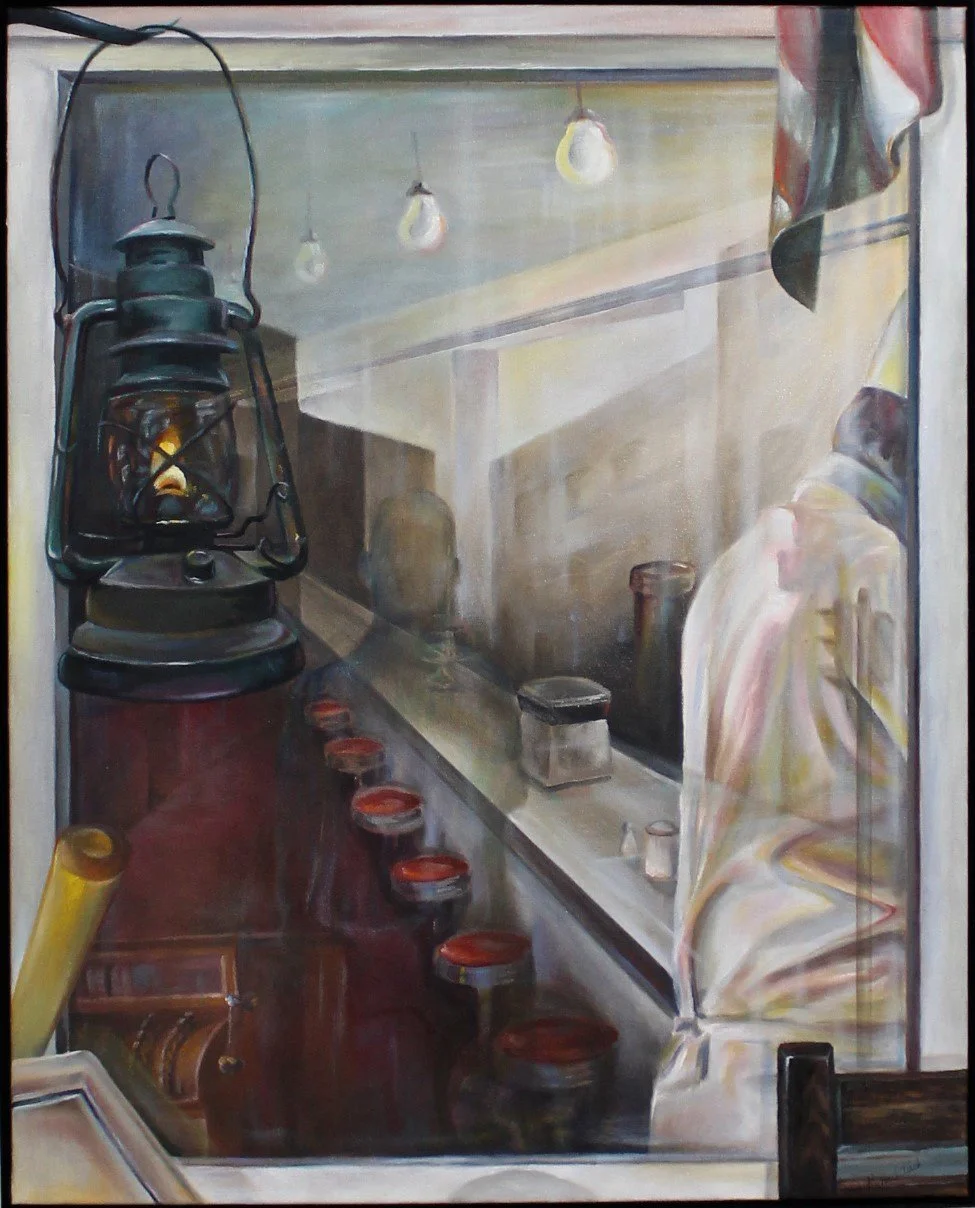
This piece continues Tuck’s long‑standing engagement with the interplay between seen and unseen space. Whether interpreted architecturally, psychologically, or metaphorically, the work encourages viewers to consider how boundaries shape experience. The inversion embedded in the title — inside becoming outside, outside becoming inside — echoes the artist’s interest in perceptual ambiguity and the subtle drama of spatial relationships.
As with many of Tuck’s works, the painting’s power lies in its restraint: a quiet invitation to inhabit a moment of transition, to question one’s vantage point, and to feel the tension between containment and openness.