 Image 1 of 1
A pivotal early drawing where figure, geometry, and surface begin to test each other
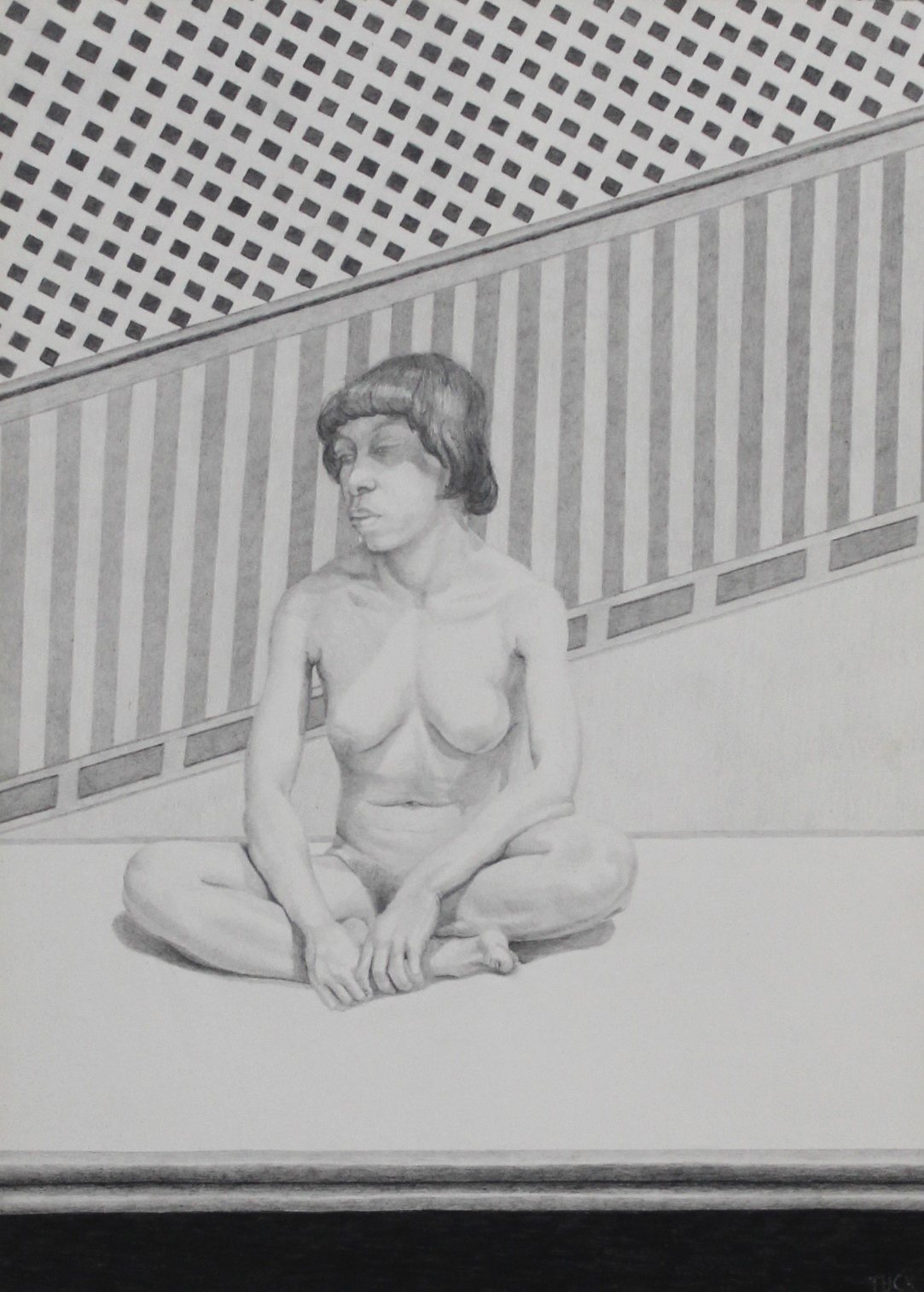
In Woman Sitting Indian Style (1975) I was still working out how to convincingly define the human form using the full expressive range of pencil on hard‑pressed rag paper. I began the drawing in late 1974 with a straightforward intention: to place a figure in a clearly defined space and let the qualities of pencil—pressure, contour, tonal gradation—carry the weight of the image. At first, the background was deliberately neutral so the viewer’s attention would rest entirely on the figure.
Months later, returning to the drawing, I realized that the surrounding space could be activated without diminishing the figure. In fact, the figure became more engaging when the background asserted itself. The sharp diagonal behind her introduces a striking contrast, while the strong horizontal edge near the bottom acts almost like a platform, locking her into a more tightly defined spatial field. These two axes—diagonal and horizontal—begin to choreograph the figure’s presence.
Above the diagonal, the optical wallpaper pattern pushes forward with unexpected insistence. I had used a similar device in an earlier self‑portrait, and here it becomes a way to challenge the figure, to make the background compete for attention. This was an early step toward fragmenting visual space, a direction that would become more pronounced in later works.
By the time I reached Woman Leaning Left and the larger 1976 drawings, I had moved from small‑scale figures to large‑scale tensions where figure and ground operate with equal priority. But Woman Sitting Indian Style marks the moment when that shift first announced itself—quietly, but unmistakably.
Dimensions: 10″ × 12″
Medium: Pencil drawing
Framing: Custom‑framed by me to complement my painting aesthetic
This photo has been modified for public viewing.
A pivotal early drawing where figure, geometry, and surface begin to test each other
In Woman Sitting Indian Style (1975) I was still working out how to convincingly define the human form using the full expressive range of pencil on hard‑pressed rag paper. I began the drawing in late 1974 with a straightforward intention: to place a figure in a clearly defined space and let the qualities of pencil—pressure, contour, tonal gradation—carry the weight of the image. At first, the background was deliberately neutral so the viewer’s attention would rest entirely on the figure.
Months later, returning to the drawing, I realized that the surrounding space could be activated without diminishing the figure. In fact, the figure became more engaging when the background asserted itself. The sharp diagonal behind her introduces a striking contrast, while the strong horizontal edge near the bottom acts almost like a platform, locking her into a more tightly defined spatial field. These two axes—diagonal and horizontal—begin to choreograph the figure’s presence.
Above the diagonal, the optical wallpaper pattern pushes forward with unexpected insistence. I had used a similar device in an earlier self‑portrait, and here it becomes a way to challenge the figure, to make the background compete for attention. This was an early step toward fragmenting visual space, a direction that would become more pronounced in later works.
By the time I reached Woman Leaning Left and the larger 1976 drawings, I had moved from small‑scale figures to large‑scale tensions where figure and ground operate with equal priority. But Woman Sitting Indian Style marks the moment when that shift first announced itself—quietly, but unmistakably.
Dimensions: 10″ × 12″
Medium: Pencil drawing
Framing: Custom‑framed by me to complement my painting aesthetic
This photo has been modified for public viewing.