 Image 1 of 1
A monochromatic figure study where contour, light, and sensory perception reshape how a body is seen
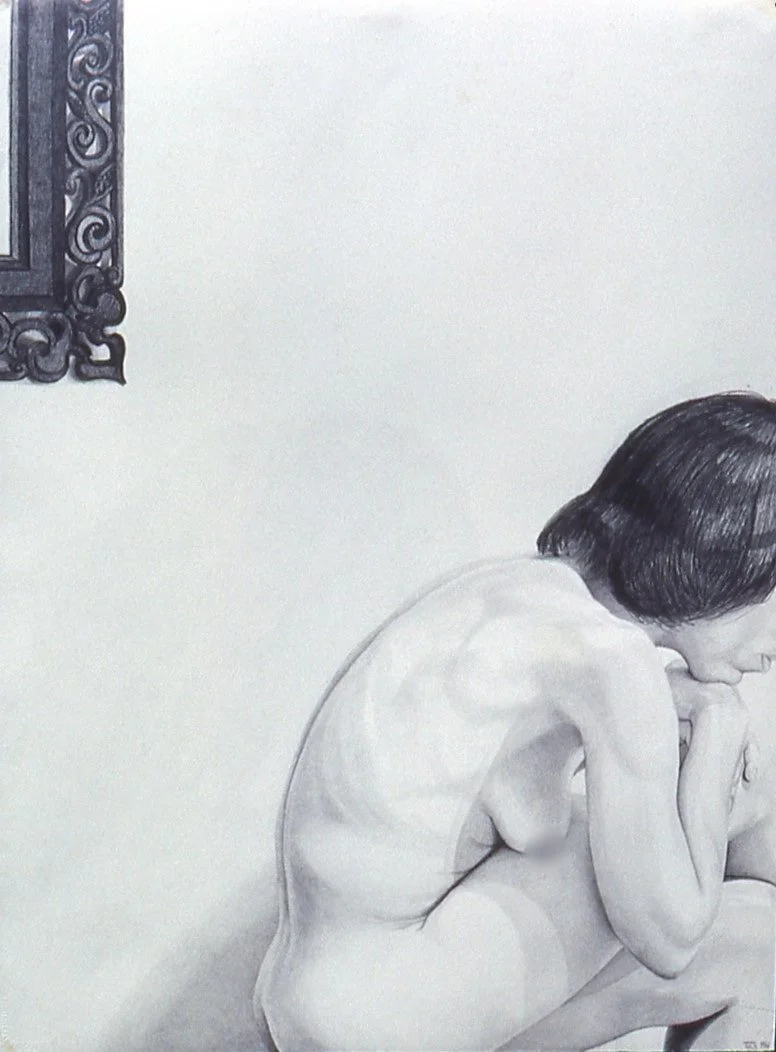
In Woman Leaning Right (1976) I was reaching the height of my early exploration into monochromatic light and shade on the human figure. This drawing belongs with the larger figurative works of that year, and—like Man Figure and Woman Leaning Left—it reflects a moment when contoured edges became more than boundaries. They became active partners in animating the figure.
The edge in this drawing is not a limit; it’s a device that sharpens attention. The shaded form presses against it, and the contour responds with its own sensory language—a tactile, almost sculptural presence. Working this way taught me that the contour can behave like a perceptual hinge: it turns the viewer’s eye from the visible surface toward the implied continuation of the body beyond the cropped frame.
When we look at a human figure, our instinct is to build a personality narrative. But the cropped figure interrupts that reflex. By removing the head and the remainder of the body, the drawing shifts the viewer’s attention from identity to pure visual response—to line, shape, pressure, and tonal weight. The result is a new kind of human image narrative, one that aligns more closely with how we respond to abstract form than to portraiture.
As with Man Figure, the cropping is not a loss. It’s an understanding—a reframing viewing a closer detail, a fragment but an insistence that the body continues, that the form is whole even when only part of it is shown.
(Notice: the image has been modified for public viewing)
· Dimensions: 22″ × 30″
· Medium: Pencil drawing
· Framing: Custom-framed by me to complement my specific painting
aesthetic.
A monochromatic figure study where contour, light, and sensory perception reshape how a body is seen
In Woman Leaning Right (1976) I was reaching the height of my early exploration into monochromatic light and shade on the human figure. This drawing belongs with the larger figurative works of that year, and—like Man Figure and Woman Leaning Left—it reflects a moment when contoured edges became more than boundaries. They became active partners in animating the figure.
The edge in this drawing is not a limit; it’s a device that sharpens attention. The shaded form presses against it, and the contour responds with its own sensory language—a tactile, almost sculptural presence. Working this way taught me that the contour can behave like a perceptual hinge: it turns the viewer’s eye from the visible surface toward the implied continuation of the body beyond the cropped frame.
When we look at a human figure, our instinct is to build a personality narrative. But the cropped figure interrupts that reflex. By removing the head and the remainder of the body, the drawing shifts the viewer’s attention from identity to pure visual response—to line, shape, pressure, and tonal weight. The result is a new kind of human image narrative, one that aligns more closely with how we respond to abstract form than to portraiture.
As with Man Figure, the cropping is not a loss. It’s an understanding—a reframing viewing a closer detail, a fragment but an insistence that the body continues, that the form is whole even when only part of it is shown.
(Notice: the image has been modified for public viewing)
· Dimensions: 22″ × 30″
· Medium: Pencil drawing
· Framing: Custom-framed by me to complement my specific painting
aesthetic.