A portrait shaped by dignity, lived experience, and the quiet presence of another time
When I painted Mrs. Mary, I wanted the portrait to feel personal — like the woman my wife and I came to know — without slipping into sentimentality. Her quiet dignity and emotional presence rise naturally through the light and structure. Her irises were as perennial as her kind manner, and I tried to let that steadiness guide the painting’s tone.
I approached the composition with the modernist clarity I’ve relied on for decades, but shaped the surface with a more traditional realist sensitivity. Small shifts of color and tone reveal her lived experience without overstating it. The brushwork stays attentive but restrained, allowing her presence to emerge slowly, the way real familiarity does.
On the right side, a narrow window runs from top to bottom, holding the faint reflection of a figure. That reflected presence frames a different time — a parallel moment brushing against hers. It expands the psychological space around her, suggesting memory, continuity, and the quiet overlap of lives.
For me, that surrounding space is as important as the likeness itself. The painting holds a stillness that invites the viewer to stay with her a little longer — to sense the person she was, and the warmth she carried into every room.
A portrait shaped by dignity, lived experience, and the quiet presence of another time
When I painted Mrs. Mary, I wanted the portrait to feel personal — like the woman my wife and I came to know — without slipping into sentimentality. Her quiet dignity and emotional presence rise naturally through the light and structure. Her irises were as perennial as her kind manner, and I tried to let that steadiness guide the painting’s tone.
I approached the composition with the modernist clarity I’ve relied on for decades, but shaped the surface with a more traditional realist sensitivity. Small shifts of color and tone reveal her lived experience without overstating it. The brushwork stays attentive but restrained, allowing her presence to emerge slowly, the way real familiarity does.
On the right side, a narrow window runs from top to bottom, holding the faint reflection of a figure. That reflected presence frames a different time — a parallel moment brushing against hers. It expands the psychological space around her, suggesting memory, continuity, and the quiet overlap of lives.
For me, that surrounding space is as important as the likeness itself. The painting holds a stillness that invites the viewer to stay with her a little longer — to sense the person she was, and the warmth she carried into every room.
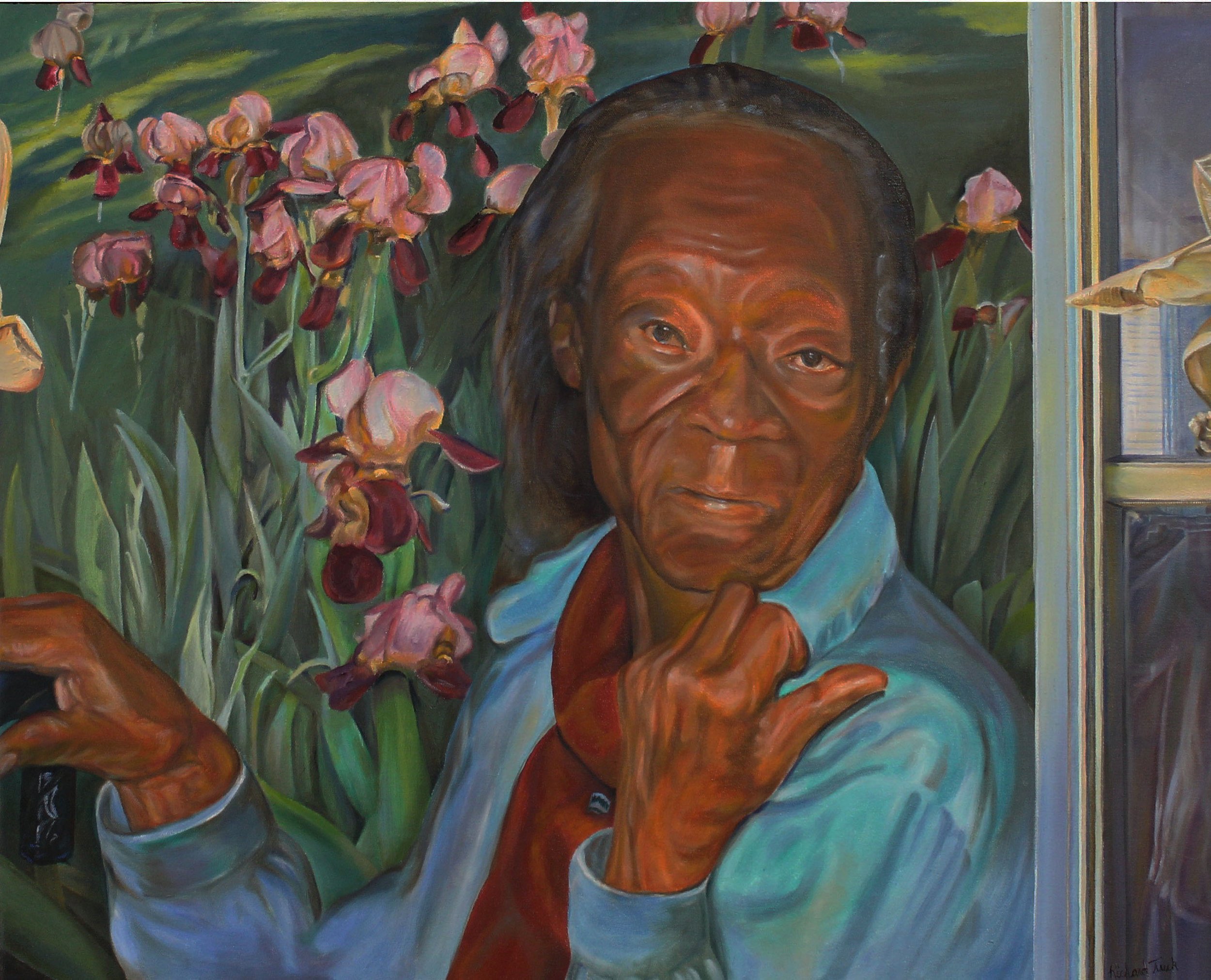 Image 1 of 1