 Image 1 of 1
A study of twisting leaves, shifting blues, and the quiet illusion of suspended space
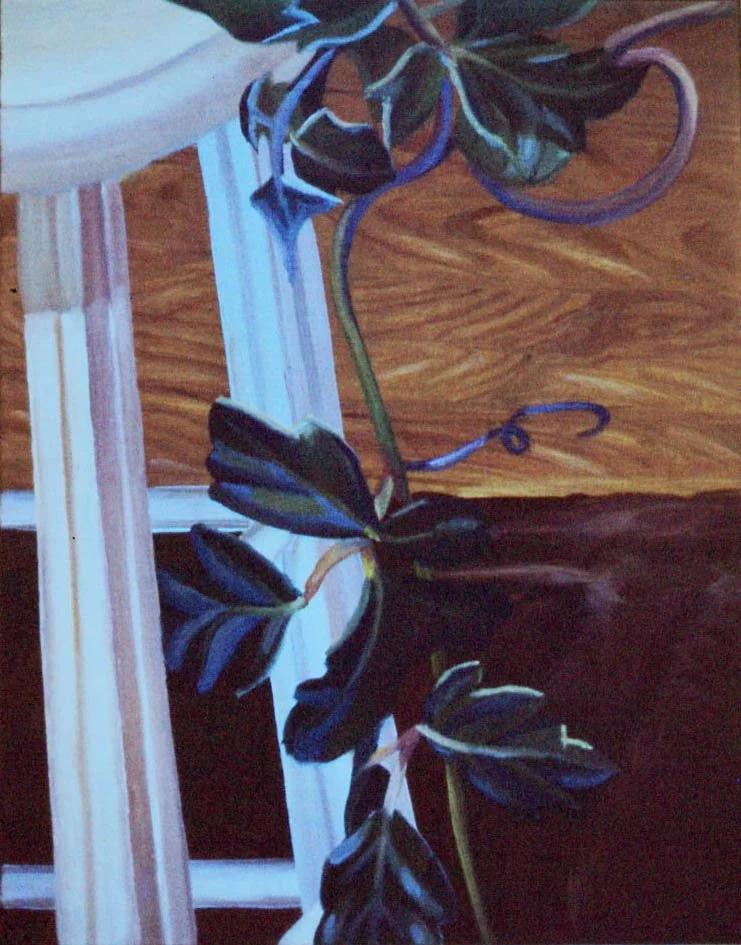
When I painted Ivy Vine, I was exploring how a simple plant could become visually charged through careful attention to color and placement. The twisting ivy leaves carry unique shades of blue — not purely naturalistic but perceptually tuned — so the vine feels both observed and slightly abstracted. Those blues play against the complementary architectural elements of the white stool legs, which pick up faint touches of blue and light magenta. That subtle color echo was important: it ties the plant to its surroundings without diminishing its independence.
The wood‑grained floor behind and the dark brown scatter rug beneath create a grounded base, yet the dangling leaves seem to float from top to bottom. That hovering quality comes from the way the shadows fall and the way the vine interrupts the vertical space. I was thinking about trompe l’oeil not as a trick but as a perceptual simplicity — letting the viewer feel the vine’s presence as if it were suspended just in front of them.
This painting sits firmly within my Ivy Series, where I was learning how everyday plants could become vehicles for exploring color structure, surface clarity, and the quiet drama of objects arranged with intention.
Dimensions: 12″ × 15″
Medium: Oil on canvas
A study of twisting leaves, shifting blues, and the quiet illusion of suspended space
When I painted Ivy Vine, I was exploring how a simple plant could become visually charged through careful attention to color and placement. The twisting ivy leaves carry unique shades of blue — not purely naturalistic but perceptually tuned — so the vine feels both observed and slightly abstracted. Those blues play against the complementary architectural elements of the white stool legs, which pick up faint touches of blue and light magenta. That subtle color echo was important: it ties the plant to its surroundings without diminishing its independence.
The wood‑grained floor behind and the dark brown scatter rug beneath create a grounded base, yet the dangling leaves seem to float from top to bottom. That hovering quality comes from the way the shadows fall and the way the vine interrupts the vertical space. I was thinking about trompe l’oeil not as a trick but as a perceptual simplicity — letting the viewer feel the vine’s presence as if it were suspended just in front of them.
This painting sits firmly within my Ivy Series, where I was learning how everyday plants could become vehicles for exploring color structure, surface clarity, and the quiet drama of objects arranged with intention.
Dimensions: 12″ × 15″
Medium: Oil on canvas