Young Player Fronts Players (2024) and Related Works
oil on canvas, 24×30” - 2024
Young Player Fronts Players explores a moment of youthful intensity and emerging identity within a loosely defined social space. The idea for the painting first came to me while attending a blues concert. Watching veteran musicians settle into a song, I noticed how their emotional state shifted — a kind of inward concentration that deepened as the music unfolded. That transformation reminded me of younger players I’ve observed over the years: different time, different place, yet driven by the same intention, the same hunger to inhabit the music fully.
The central figure — the “young player” — carries that energy. His gesture reveals both vulnerability and self‑assertion, the qualities that shape him as a musician and as a personality. Around him, the surrounding forms remain intentionally ambiguous. They might be teammates, rivals, mentors, or simply witnesses. Their indistinct presence creates a tension between individuality and group dynamics, a recurring theme in my work.
Spatially, the figures and environment interlock through flattened planes and rhythmic contours, echoing early modernist explorations of social pressure and collective presence. This is part of my ongoing commitment to psychological figuration — treating the figure not as portraiture but as emotional and formal architecture, a structure through which internal states become visible. The related works on this page share that same approach.
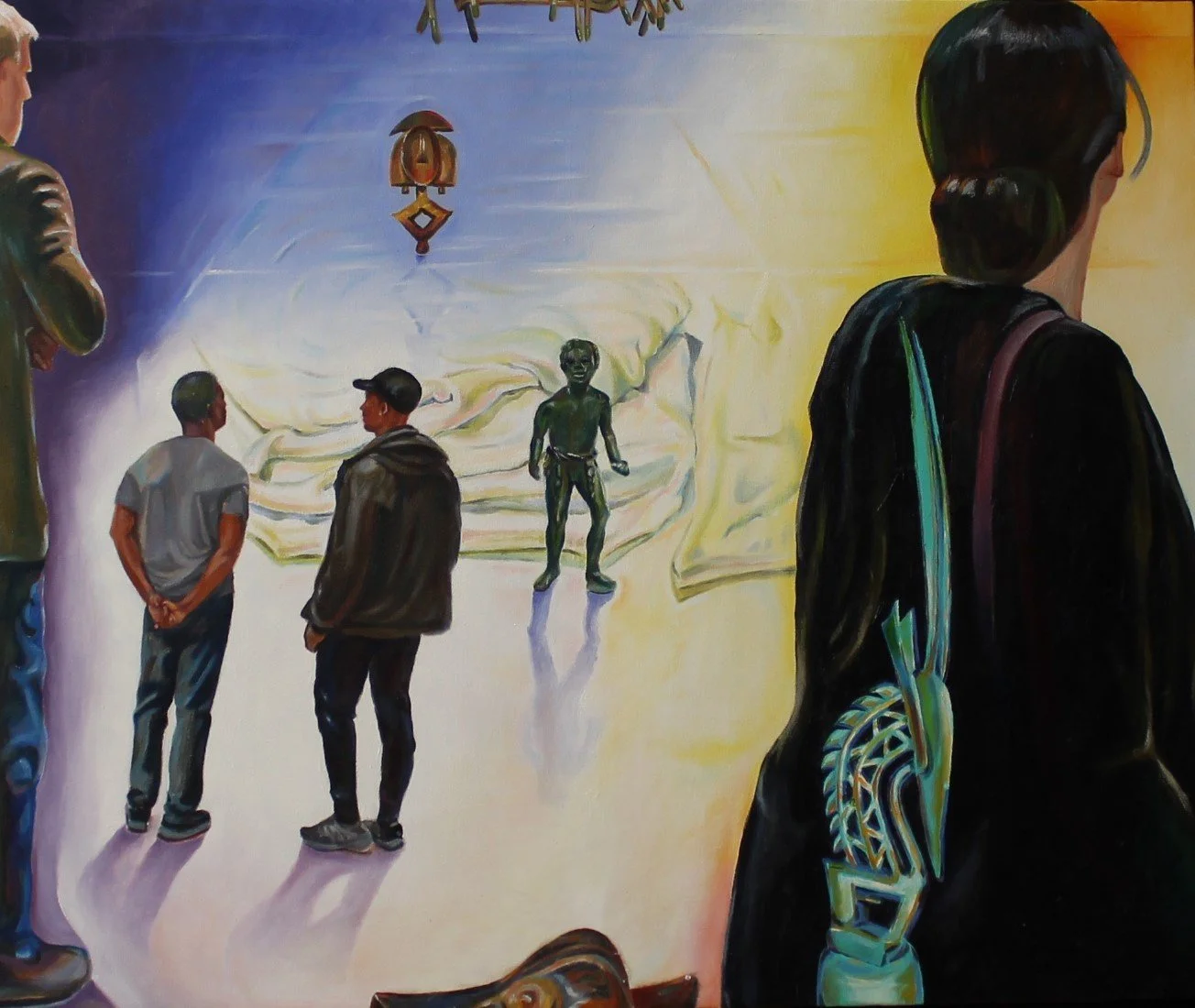
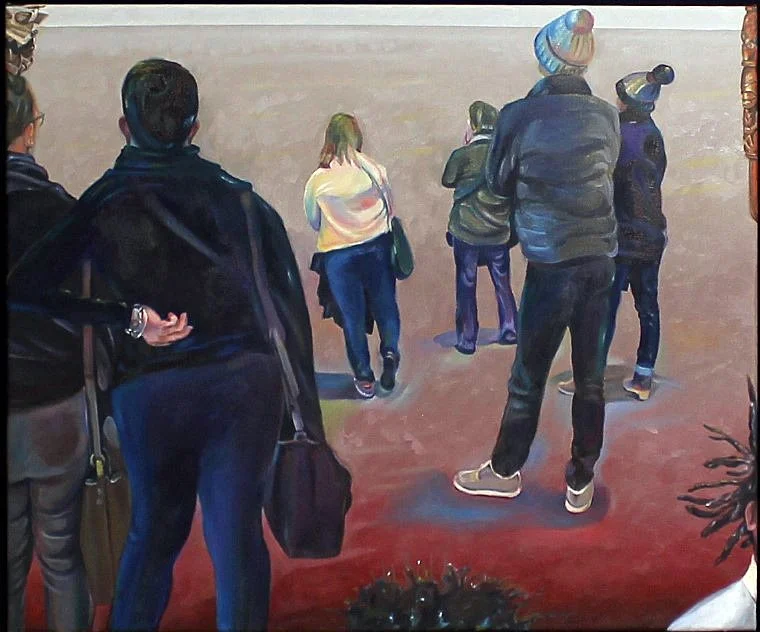
Color functions as emotional temperature. Warm and cool passages shift against one another, establishing hierarchy, focus, and mood. My long‑standing interest in Impressionist color remains visible — especially in the central figure’s white shirt — while a touch of Fauvist intensity appears in the heightened contrasts, similar to what emerges in Peering (2019) and In the Distance (2019).
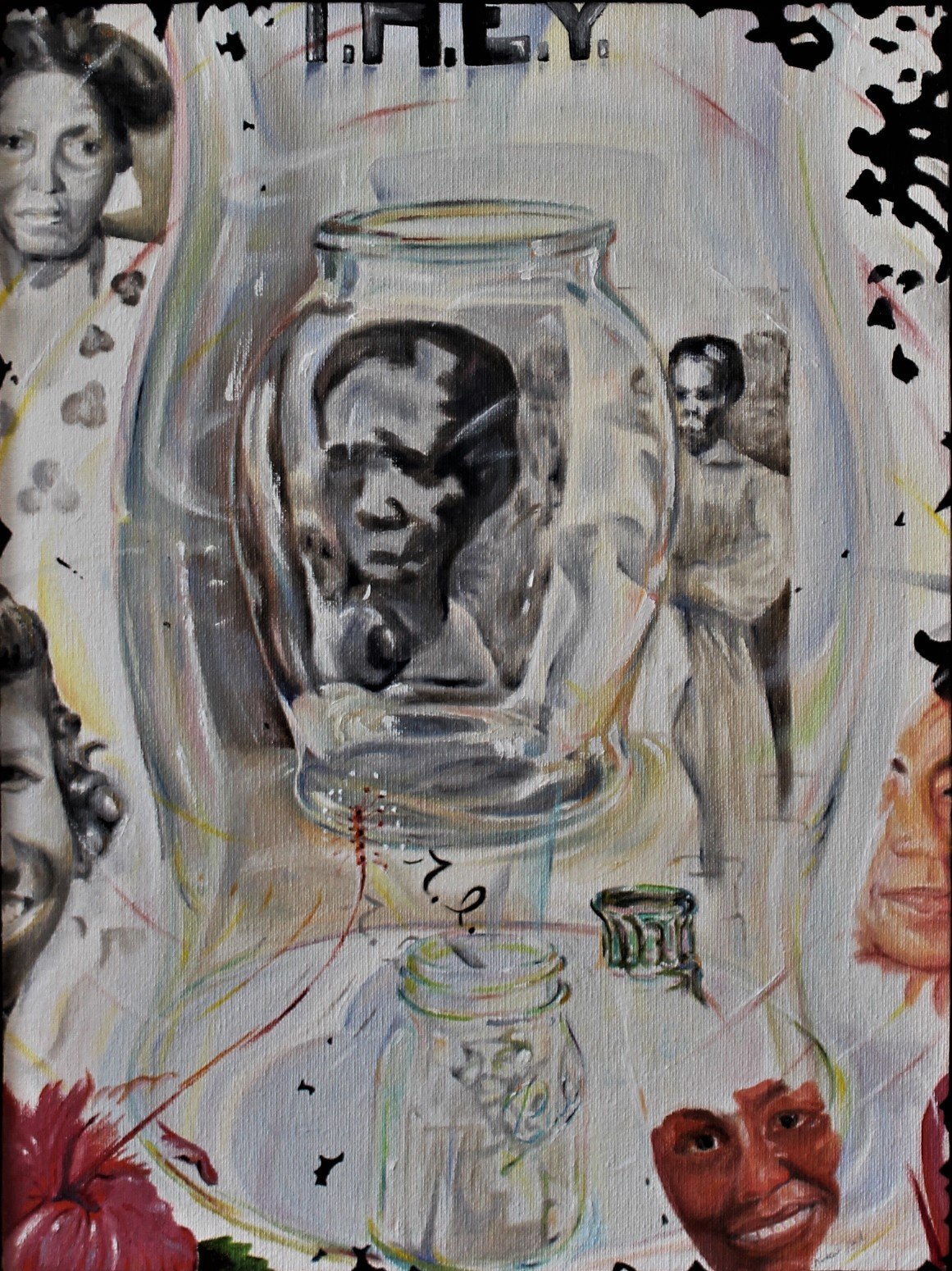
I found a particular sense of freedom in fragmenting the saxophone, much as I did with the broken glass imagery in Mother (2019). Glass has been part of my visual vocabulary since my early career as a glass painter. For me, it represents an emotional threshold — a surface that both reveals and separates, a metaphor for the fragile boundary between inner life and outward expression
Related Works
-
![Peering-oil-painting- richard-l-tuck-2019]()
Peering (2019)
Two figures stand on opposite sides, one in warm reds and yellows, the other in cool blue, with two men mid‑conversation in the distance and a bronze youth centered.
-
![]()
Mothers (2019)
Fragmented women’s faces and bodies appear within reflections of a glass globe, jug, and Ball jar, with script letters and black shapes drifting across the surface.
-
![]()
In the Distance (2019)
Six faceless figures stand on a deep red ground facing a flat horizon, with sharp blue and yellow highlights and African sculptural ornaments at the top corners.
-
![]()
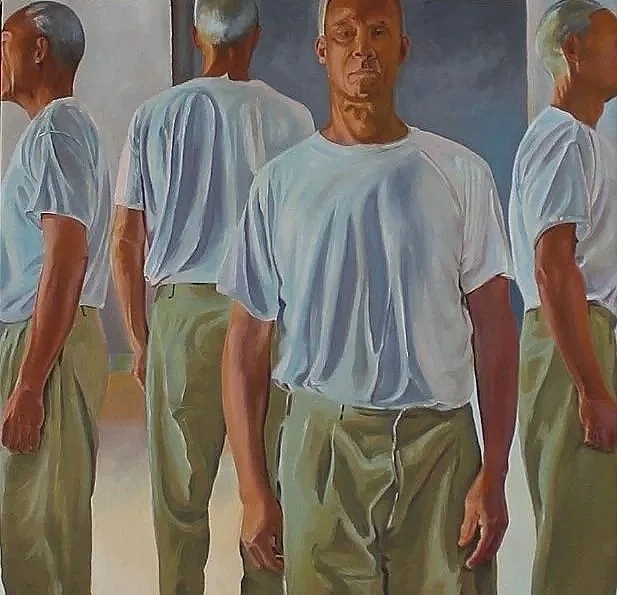
Me Four Times (2019)
A repeated male figure, cropped and uniformly dressed, becomes a loop of gestures that fractures identity and heightens the tension between presence and anonymity.