Woman on Sofa (1977)
An early study in the emotional and compositional power of the fragment.
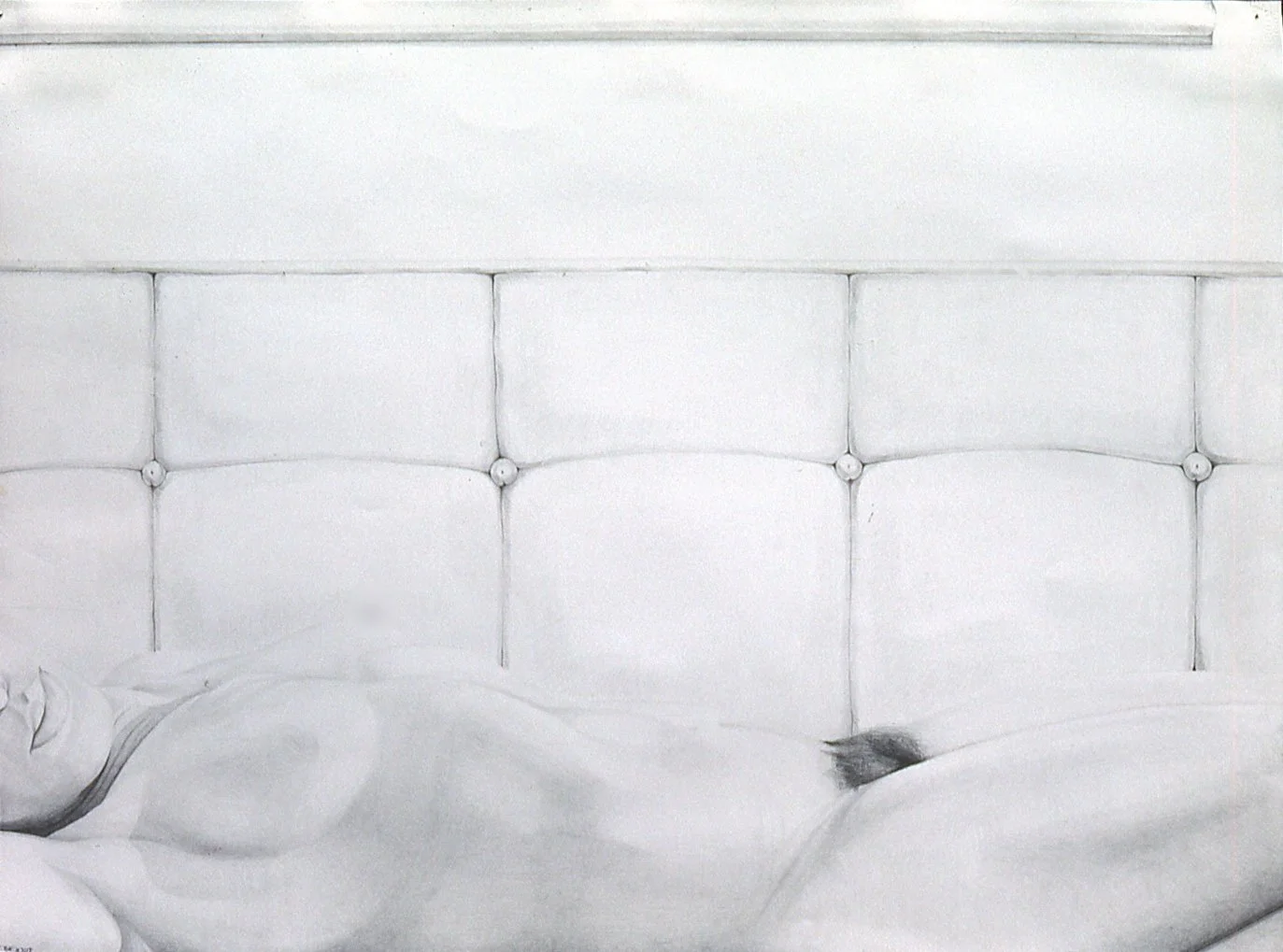
Pencil on rag paper, 18″ × 24″, 1977
In Woman on Sofa the figure becomes a foundational horizontal element, anchoring the bottom of the composition. Above her, the puffed forms and buttons of the couch back float lightly, while the molding along the top edge activates the upper area without carrying weight. The face cropped at the left edge and the legs cropped at the right concentrate attention on the musculature of the torso, the breast, and the gently arching thighs. The body is well defined weighted yet neutral, sensual without being sexually suggestive.
By this time, I had seen many early modernist figurative works that used fragments to evoke emotional depth. Woman Leaning Right was my first real exploration of the partial figure using edges. Another drawing Reclining Figure (1976), produced shortly after Leaning Right and before this drawing, carried that idea forward: the rear view of the figure sweeps from shoulders at the left edge to knees at the right, the flowing contours engaging the viewer’s sentiments much like the layered mountainsides of Mount Pisgah on the Blue Ridge Parkway. I painted a small oil sketch of those mountains in 1984, and the analogy remains clear— mountains appear as fragments of a larger whole, yet we accept the view and place our emotional response within that partial experience.
Before 1984 I produced several figure studies and large oil paintings exploring the fragment. My engagement with the power of the fragment—the layers of awareness and the thresholds between emotional perception—has persisted throughout my work.
Woman on Sofa (1977)