Man Figure and Related Works
The pivotal drawing in which my exploration of edge‑engaged figures, spatial tension, and the psychology of form reaches full expression.
Man Figure, pencil drawing, 22” x 30”, 1976
Man Figure stands at the center of my shift from smaller figurative drawings—where the figure occupied a generous, breathable space—to compositions that press the body toward the edges, asking the viewer to feel the form as it meets and activates the boundary. I began exploring this compositional tension in the leaning female figure drawings of the same period, but Man Figure carries that idea to its fullest expression.
The drawing holds the figure in a moment suspended between observation and presence—an individual caught in a state of becoming. This quality emerged from my ongoing interest in the human form as a vessel for psychological tension and quiet revelation. The linework and tonal gradations emphasize both gesture and detail, allowing the figure to feel grounded in its physical weight yet transient in its movement across the edge.
While working, I was acutely aware of posture, contour, and the way the body negotiates space. The simplified, neutral context gives the figure a shared locus of attention, as if discovered there by accident—a moment captured rather than staged. That sense of immediacy invites viewers to project their own response, to witness the figure as it was felt, constructed, revised, and ultimately revealed.
Man Figure marks a pivotal point in my exploration of how the cropped or edge‑engaged figure can heighten the viewer’s sensory and psychological engagement. It is the anchor work of this group, with the related drawings—Woman Leaning Right and Woman Leaning Left—showing the evolution of the ideas that culminate here.
The works below trace the development of my interest in edge‑engaged figures, spatial tension, and the emotional power of the fragment.
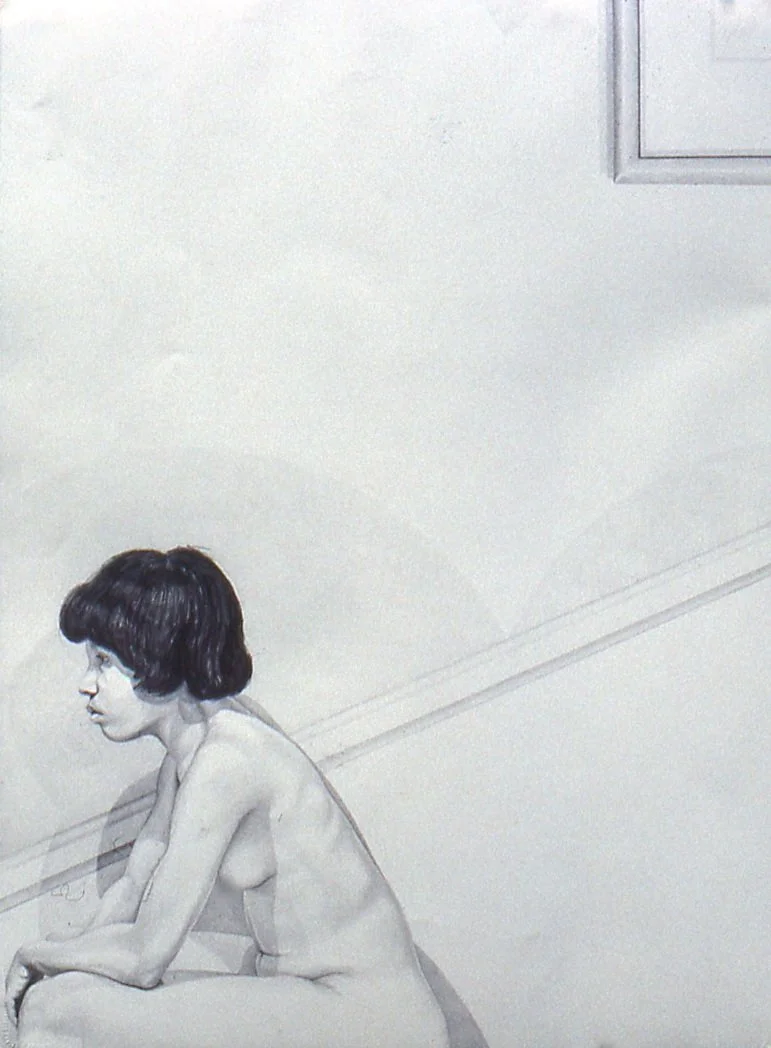
Woman Leaning Left - Early exploration of the figure pressing toward the picture edge.”
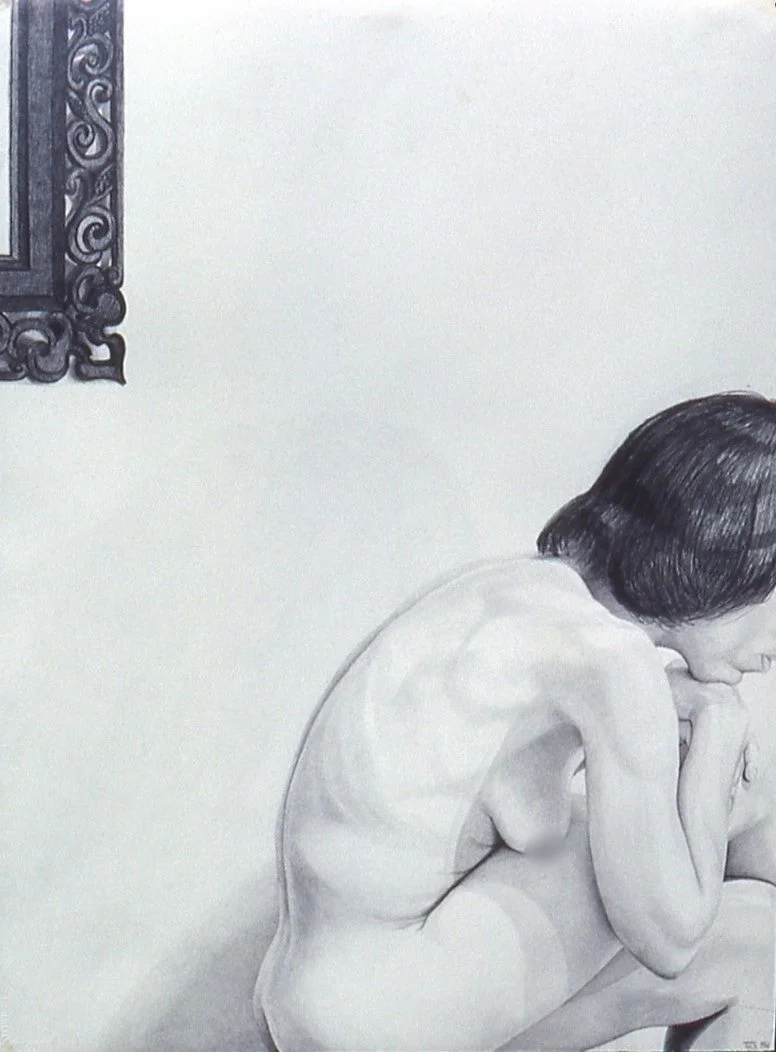
Woman Leaning Right - Companion drawing asserting the figure’s presence through contour and light.
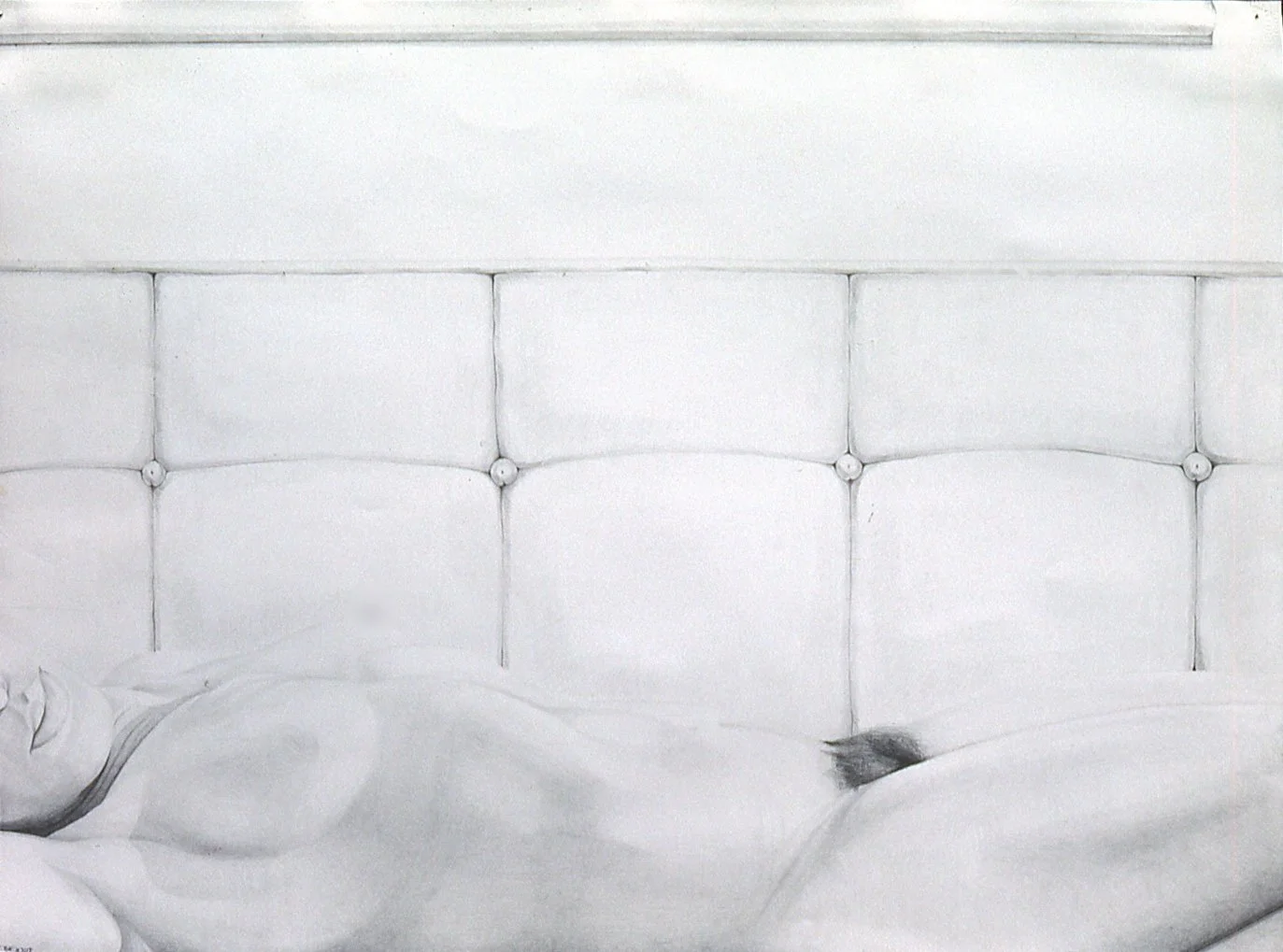
Woman on Sofa -Fragmented figure as foundational form—an emerging study in partiality.”