Plants have long been central to my exploration of inhabited space. Botanical life often enters our living spaces quietly, chosen with care yet noticed mostly in passing. We place plants near windows, along hallways, and beside furnishings—tending to them just enough to keep them vibrantly alive. In daily life, they remain part of our peripheral world, companions in motion.
When studied directly, however, they shift into another dimension. A single arrangement, as in Flowers in a Green Vase, becomes a self-contained presence. Works such as Flowers in Shell Vase reveal how plant forms can animate the surrounding space.
Close-up views like Amaryllis Petals allow the plant to define the visual field. In Amaryllis and Chair and Amaryllis Folds, botanical forms engage in a quiet conversation with nearby objects, shaping the experience of the room around them.
In Prayer Plant in Hallway, the plant invites a deeper spatial journey, drawing the viewer into the lived environment and revealing how botanical presence can guide movement through inhabited space.
With Prayer Plant and Snake Plant—both drawn in oil pastel in 1987—the interaction between botanical life and architectural space becomes almost structural. My long-standing approach is also evident in the Legacy Threads Ivy Series.
Together, these works reflect my New Realist approach to botanical subjects, emphasizing careful observation and the relationship between plant life and the rooms we inhabit.
Plants and Botanical Studies
A vivid study of a croton’s patterned leaves, rendered in oil pastels with close observational clarity.
Croton Plant (1987)
Cactus Plant (1980)
A pencil drawing capturing the compact form and surface textures of a cactus in quiet stillness.
A watercolor pairing of amaryllis and chair, exploring the dialogue between plant and object.
Amaryllis & Chair (1990)
A quiet interior study of a prayer plant, its patterned leaves spreading outward in soft light.
Prayer Plant (1987)
A close study of folded amaryllis petals, revealing delicate structure and subtle color transitions.
Amaryllis Folds (1990)
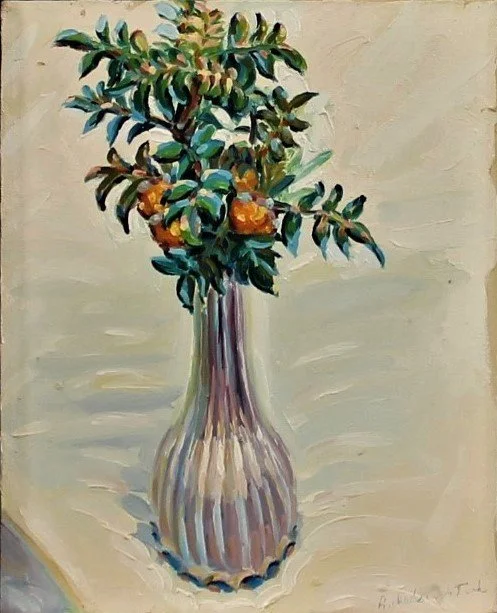
Floral arrangement in a shell‑shaped vase, blending organic forms with sculptural containment.
Flowers in Shell Vase (1982)
An architectural rendering of a snake plant, emphasizing upright leaves and sculptural form.
Snake Plant (1987)
Corn Plant (1987)
A domestic still life of a corn plant, its long arching leaves captured with realist precision.
An intimate, magnified view of amaryllis petals defining the visual field through texture and light.
Amaryllis Petals (1990)
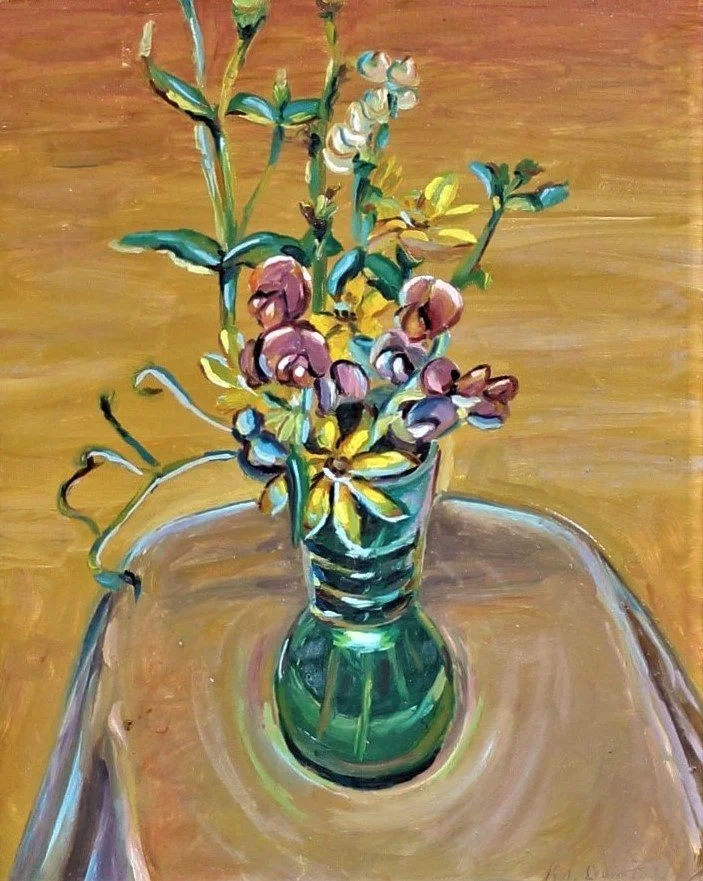
Flowers in Vase (1982)
A classic floral still life exploring balance, color, and the quiet presence of blossoms.
Prayer Plant in Hallway (1979)
A hallway scene where a prayer plant anchors the space and guides the viewer’s movement.
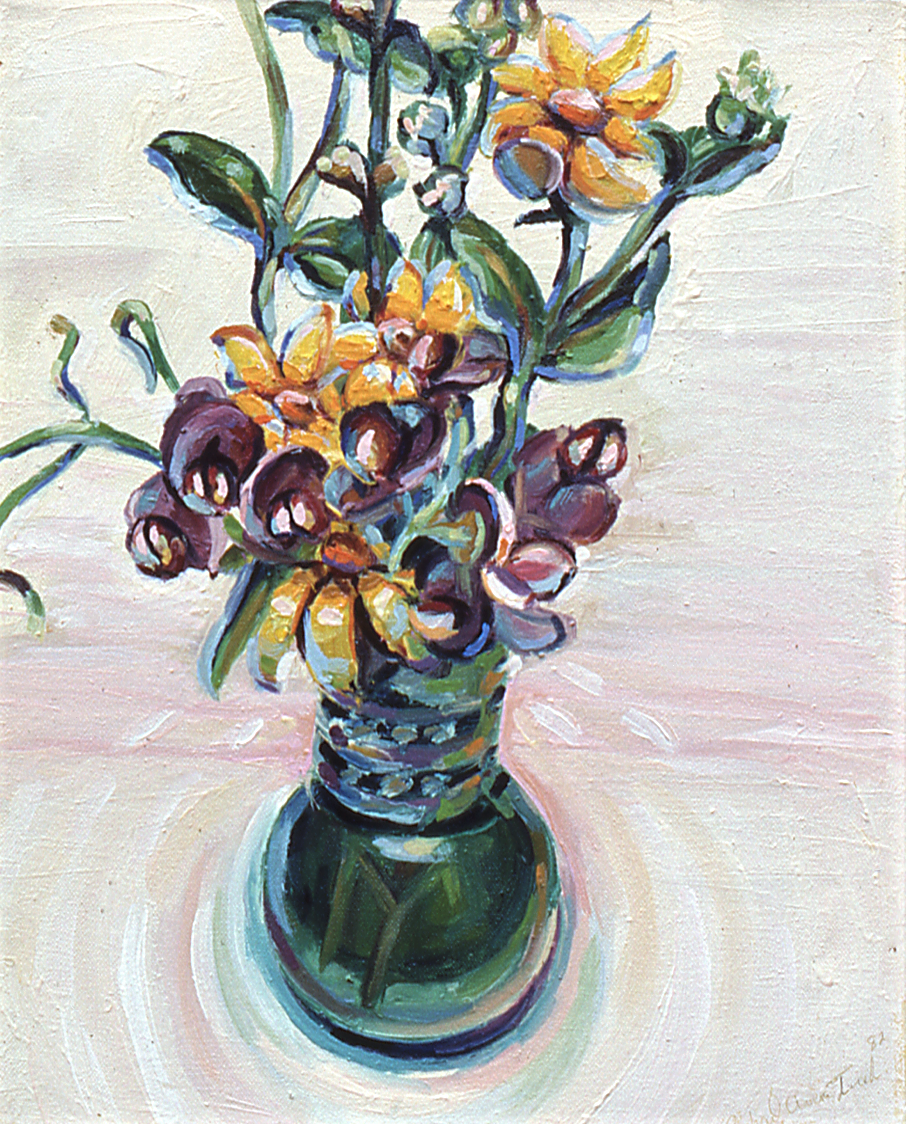
Flowers arranged in a green vase, highlighting the interplay of color, reflection, and interior light.
Flowers in Green Vase (1982)
Compare these Plants and Botanicals to still life on Everyday Life